Presented by Goldenvoice: New Gold Standard
An Interview with Christian Löffler
February 12, 2026
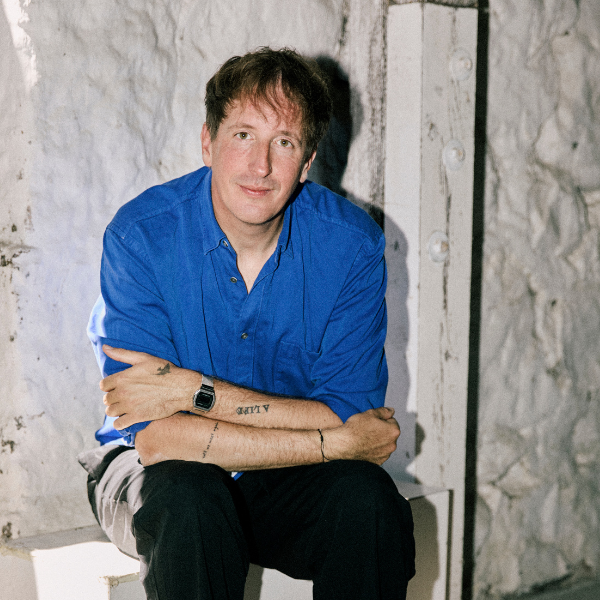
We had the chance to catch up with German producer, DJ, and visual artist Christian Löffler ahead of his show at The Regency Ballroom on 2.26 and El Rey Theatre on 3.6. Löffler shares his production process, how he creates his album artwork, working on new music, plus more.
Your music often feels deeply tied to place and atmosphere. How does the environment you’re in right now influence the way you compose or perform?
Living in a secluded, quiet place is essential to me for creating my art. Unlike many friends, I never moved to Berlin which is only two hours from where I live. I realized pretty soon that I needed a peaceful beach walk to reflect on whatever was on my mind and translate it into music.
The new album has a very introspective emotional arc. Was there a specific feeling or moment that acted as the starting point for this record?
After I finished my last album, A Life, I decided to go on an extended tour. I was done with making music and just wanted to tour with it. Usually, being on tour meant I would take the easiest flight back home, lock myself in the studio to work on new stuff, and spend as much time as possible at home. This time, I wanted to spend time in different places and enjoy at least a few stops, rather than just stopping at the airport. I also opened myself to collaborations. Where I would usually only send music via email, I also started conducting sessions while in LA. During that period, I met people who became important, and all of this together sparked a lot of creativity in me which led to another album.
You’ve said before that silence is as important as sound in your work. How do you decide when a track needs restraint rather than expansion?
In my production process, I only use sounds that I’m 100% satisfied with. So, instead of going with an 85% idea and trying to make it up by adding other elements or sounds, I try to find a better sound. That is also in my arrangements: I rarely have more than 15 tracks in a single song. I like to give the elements space and time to breathe, so the full spectrum is audible.
How does performing at venues like The Regency Ballroom and El Rey Theatre shape the way you approach a live set, compared to more traditional club spaces?
I love playing in more traditional concert venues. For me, the best part about playing live is the connection with the audience. I have fans who have been coming to the shows for years already, and I love seeing them again. It’s all about the energy for me and having a good time together. Also, it feels freer than, say, playing at a festival. I have time to experiment, and I can throw in an ambient piece when the vibe feels right.
Your music sits at the intersection of electronic, classical, and ambient worlds. Do you think in terms of genre when creating, or is it more instinctive?
Not at all, actually, or if yes, it just happens unconsciously. It’s more about whatever inspires me in the moment and what I’m feeling. Often I play little ideas on my piano and find melodies or a base for a new song. I’m not limiting myself to the computer when I’m starting a new song.
Many listeners describe your music as cinematic. Do you visualize images or narratives while composing, or does that emerge later?
This album was heavily connected to photos I took while traveling. Most of them are Polaroids I took, and I had them as cover artworks already in the early stages of the songs. I painted a few of them with watercolors, and they are the covers of the songs. Also, the album title is handwritten, and prints of the paintings are included with the vinyl version of Until We Meet Again.
How has your relationship with live performance evolved over the years, especially as your music has become more emotionally nuanced?
My sound was always very emotional, and when I think back to the time of my first album, the live set sounded much sadder than it does today. I think there’s still a lot of sensitivity in my live shows, but I also enjoy having more uplifting moments in them now.
There’s a strong sense of vulnerability in your recent work. Was it challenging to allow that level of openness into the album?
As I got older, I became more confident about expressing these things more directly. I remember when I started making music, I tried to hide it and leave a more abstract message. Now I’m in my era where I don’t care too much anymore what others think. I would rather tell the full story than leave anything out, even if it's too personal.
When preparing for a show like this, how much is carefully planned and how much is left open to the moment?
It’s a mix of both. Of course, I need to prepare the new music and have my set running, but I've never been the kind of person who rehearses much. What I always enjoyed about electronic music was the freedom and intuition it allowed. I love to follow the vibe and see where the energy leads the set.
What do you hope people feel or carry with them after leaving your upcoming shows?
I want to put as much energy into it as possible. I take so much positivity from touring, meeting fans, and just playing loud music. This is what I enjoy the most and want to give back as much as I can.
Your sound design feels very tactile and organic. What role do analog tools or physical processes play in shaping the album’s identity?
I started many tracks on the album by just playing on the piano and recording a chord progression that caught my attention. Usually, I would send short sketches to Adna, and she would add vocals and guitar lines, and we would go from there. So often, there was almost a full song without any electronic elements.
Has your definition of success as an artist changed since your earlier releases, and if so, how?
Not so much, as the biggest success for me is to have people listen to my music. I still remember having my first actual listeners on Myspace, and it’s still the best feeling for me to see people sharing the songs and commenting on social media.
Looking ahead, does this album feel like a culmination of a chapter or the beginning of something new?
It definitely leads somewhere. I already continued working on things after it came out, and it will be more electronic and uptempo again, from what I can tell now.